Lesson
1
At the
beginning of the year I divide my class into five different groups.
Each
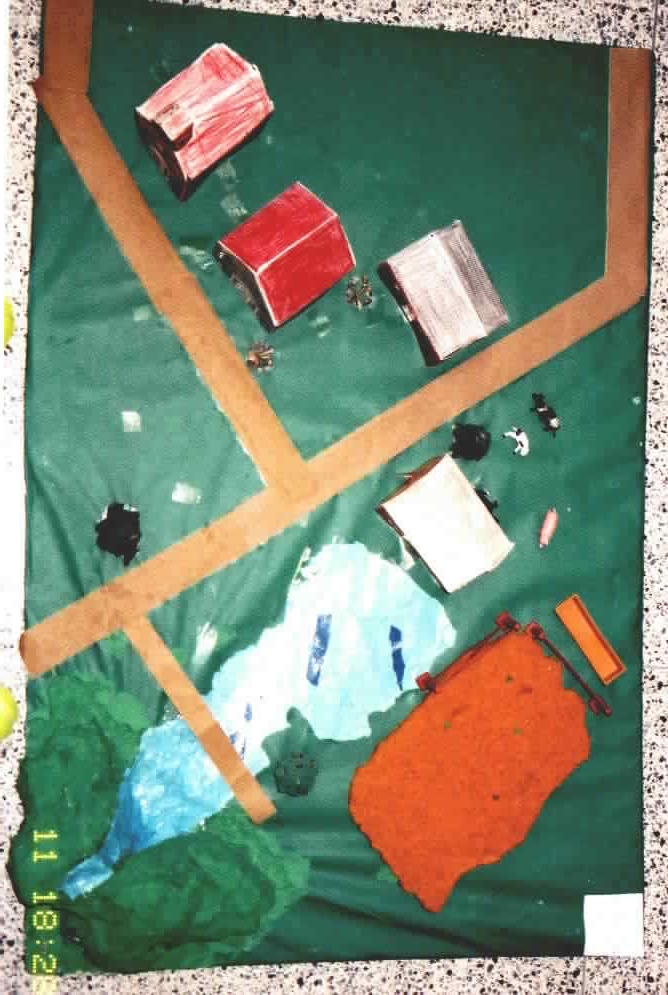
group is responsible for using cardboard and papier-mache to create a
model
of a section of land which has various topographical features including
some type of body of water. Throughout the rest of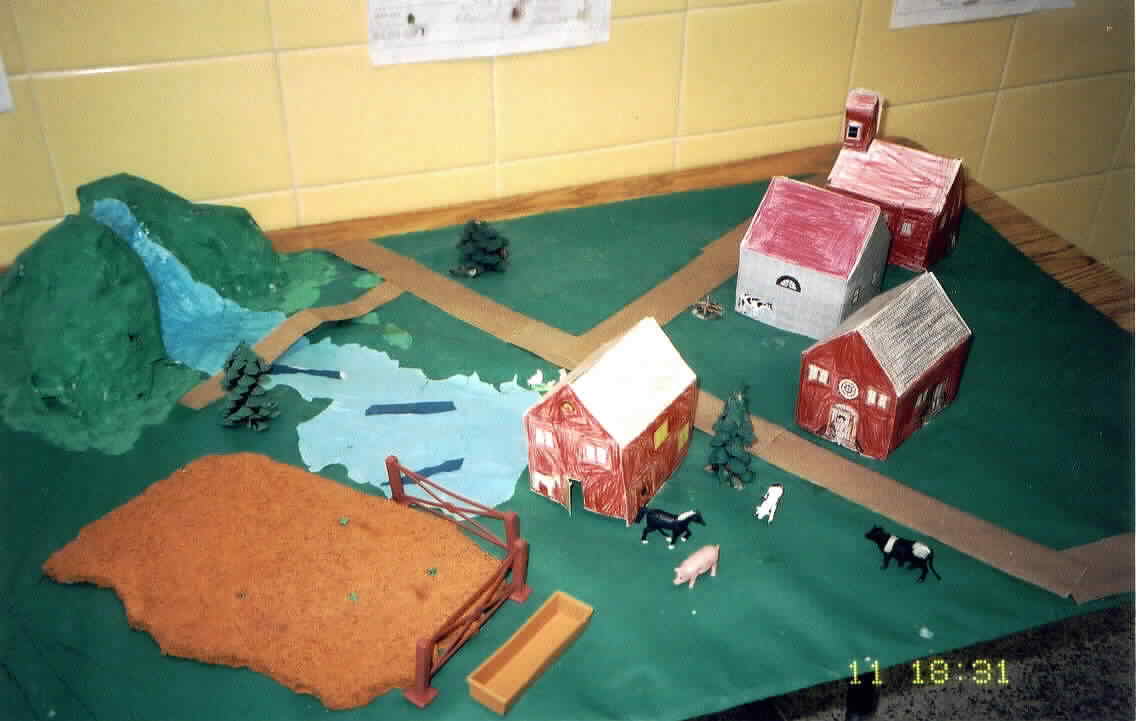 the year we follow this
"land" through the historical changes
that occur as different communities settle and live on it. The
buildings for
the communities are made using a computer program called The
Community Construction Kit. The progression is a three step process
from historical Native American community, to colonial community, and
finally to modern community. Throughout the process the class
discusses the needs of the community , how those needs are addressed,
the technology
that is appropriate to the time period, and families within the
community.
The assessment for this particular lesson is informal, students'
success
is measured by the end product, the model the group produces. the year we follow this
"land" through the historical changes
that occur as different communities settle and live on it. The
buildings for
the communities are made using a computer program called The
Community Construction Kit. The progression is a three step process
from historical Native American community, to colonial community, and
finally to modern community. Throughout the process the class
discusses the needs of the community , how those needs are addressed,
the technology
that is appropriate to the time period, and families within the
community.
The assessment for this particular lesson is informal, students'
success
is measured by the end product, the model the group produces.
Addressing Student Needs
Meeting the Curriculum Standards
Lesson 2
The students create a map for each historical phase. The mapping
skills are learned in a progression as well, beginning with the map key
, then the compass rose and cardinal directions and ending with the
concepts of rural, urban, and suburban.
The maps are assessed with a rubric.

The mapping unit is evaluated based on the students
success on the second grade social studies assessment .
|
 Options Menu
 Options Menu